Avoid These Mistakes When Working With Dogs For A Photoshoot
As a Dog Photographer, it is absolutely imperative that you learn as much as you can about dog body language and behavior.
There are many reasons for this including safety, but if you can speak ‘dog,’ your work will look incredible since your subjects will look happy, relaxed, and engaged.
If you are reading this right now, and you are photographing dogs in any capacity, I want to share some key things that can be really detrimental or even dangerous during a session.
The goal here is to keep everyone safe, but to make the session the most stress-free and enjoyable for both pets and their people!
You can click here to watch the video version of this post or you can keep on scrolling to read through.
Let’s get started!
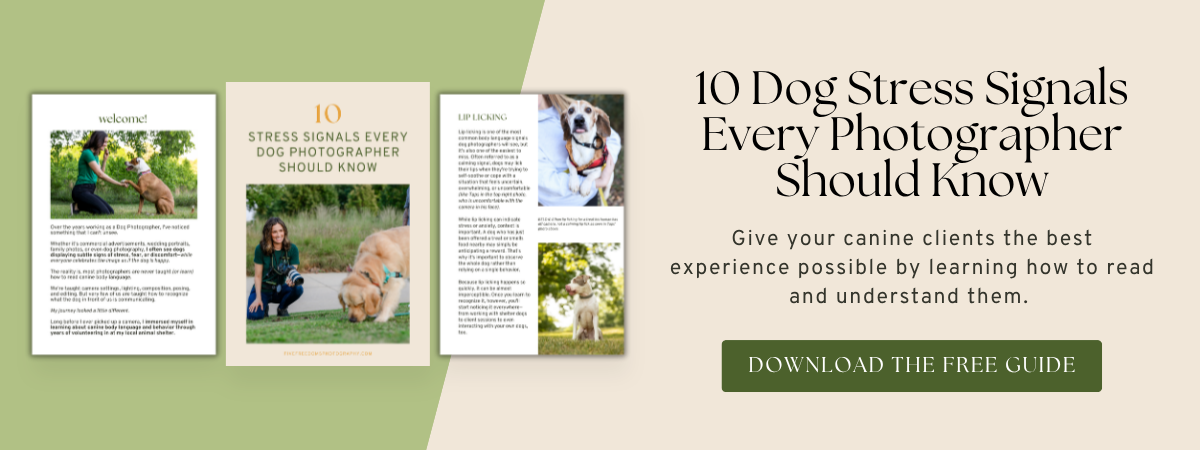
Want to take your knowledge a bit further? Click here to get a free copy of our guide, 10 Stress Signals Every Dog Photographer Should Know to help create a safe space for each pup you photograph!
Psst… love this post? Be sure to pin it for later!
Avoid These Mistakes When Working With Dogs For A Photoshoot
RUSHING THE GREETING
First, I see where people rush the greeting. So, greeting the dog on their terms allowing them to come to you and sniff you, your equipment, and get used to the location can really set your session up for success or failure.
In other words, you want to take time to get that dog comfortable with you and what’s going on. Forcing them into position too soon or immediately pulling out the camera and getting in their face is a surefire way to cause them more duress and stress than is necessary especially if they are shy, anxious, or fearful of novel objects or people.
If they are comfortable, I will give them lots of treats and praise even getting down on their level in a sit or squat facing slightly away from them, so they can check me out on their terms.
If need be, I will take out my camera and allow them to sniff it while clicking the shutter and rewarding them after each click with a treat. Once I see they are loose, happy, wiggly, and enjoying themselves is when I start the session, but not before then if possible.
Obviously, every dog is different. Some are what we like to call ‘bomb-proof’ and really enjoy anything new or exciting, such as the camera, whereas others will be very wary of you and this whole photographic experience.
So, take your time and give the dog the space they need to feel comfortable with you, so you can in turn get a better resulting photo and everyone has a great time.
BORING THEM TO TEARS
Another thing I see photographers doing in general with dogs during a session is boring them to tears. I happened to walk by a family session in a popular spot recently where the photographer simply kept repeating to the dog: sit, sit, sit, sit.
The dog was over it and was clearly disengaging from the whole thing.. In other words, the dog was bored and frustrated because they didn’t feel heard and clearly did not want to sit. This is where knowing a little bit about dog body language comes in!
With dogs, novelty is very exciting. That means if you’re working with them, make it fun. Don’t be so repetitive that you’re boring them with the same noise or command. Utilize treats, toys, affection, and noises to keep them engaged and having a good time.
If need be, break up the session with plenty of time to play and reset, so they can keep their focus and keep working alongside you to capture beautiful images.
Remember, if the dog is having a good time along with the people, the photos are going to be awesome.
BLATENTLY IGNORING THEIR BODY LANGUAGE
A third thing to make sure you don’t do during a session with dogs is to ignore their body language. How dogs communicate is entirely by body language–the slightest shift backwards, lip lick, bark, or ear tuck are all indicators of different things.
If you are a photographer who regularly works with dogs (or you want to start working with dogs) or you are a pet photographer who wants to be successful and known for understanding dogs, it’s important to study up on dog body language and behavior.
As I mentioned at the top, this will be instrumental in keeping you safe, but also for capturing incredible images that don’t show a dog looking stressed, unhappy, or sad, which I see way more often in photography than you might think.
In this age of information it is so easy to do your homework! Here are a few ideas of how you can further learn dog body language and behavior:
Taking an online dog training course or in person through a local business
Watch positive reinforcement dog training videos on YouTube or other platforms
Go to a local dog park and watching dogs interact
Volunteer your photography with shelter dogs which will assuredly be a trial by fire way to learn body language
Participate with dog playgroups
Pay attention to your own dog or take training classes together
And more!
One of the biggest compliments I receive from clients is that their dog had fun and the images turned out absolutely stunning!
Even though it might feel a bit daunting, once you start studying dogs and continue to study them, you will quickly become a body language expert that will translate into an even stronger Pet Photographer, too!
FOLLOWING DANGEROUS FADS OF PET PHOTOGRAPHY
One thing that has come up for me in the past couple of years of owning my own business is figuring out that I don’t have to do all the pet photography fads and trends to stand out. In fact, some of what we see are the “popular” styles of pet photography that can actually be detrimental to the dogs themselves.
If you have followed me for any length of time, you know that I am a huge advocate of letting the dog lead the session. For instance, I would never force a dog to do a water session who hates water – it just wouldn’t work!
Recently, I’ve learned that Holi powder sessions where dogs run through colored powder can cause respiratory issues and ingesting the powders can cause gastrointestinal issues, upset stomach, skin allergies, rashes, and even blindness.
The point is? Do what's best for your clients and their dogs and what feels good or right to you – not what’s trendy or a fad at that time.
You never want to put an animal in a situation where they can be harmed, stressed, or worse, because that will also speak badly on behalf of your business if something were to happen.
Do your own due diligence when it comes to these fads or trends and figure out something that you could do that would be unique to your business that helps the animal’s participate in innate behaviors they enjoy, not something they detest or that is harmful for them.
FORCING THEM INTO POSITION
Last but not least, I see this happen with both people and pet parents and that’s forcing the dog to do something they don’t want to do, like sit, for instance.
Again, I’m a big proponent of paying attention to the body language of a dog and if, for example, I’m working with a senior dog who has bad hips, I’m not going to make them sit, because I know it’s likely very uncomfortable for them. That’s a very specific example, but it’s one that’s actually quite common.
Forcing an animal into position especially when they are uncomfortable, stressed, or anxious can also lead to a dangerous situation for you causing the dog to lash out at you or even a potential bite scenario depending on how stressed the dog is.
Where possible try to work with where the dog is most comfortable and pose the other pets or people around that dog. Sure, it’s not always what you envisioned or ideal, but it will be better for everyone in the long run and the dog will be much happier, too.
I know that was a very abridged version about things to avoid when working with dogs, but I do hope you found these insights helpful of things you’ll try not to do moving forward in your Pet Photography work!
If by chance you want to take your dog body language knowledge a little further, download a free copy of our new guide - 10 Dog Stress Signals Every Photographer Should Know.
WORK WITH US
OTHER POSTS YOU MIGHT ENJOY
Tips For Photographing Black Dogs
Tips For Photographing Blind / Deaf Dogs
10 Simple Tips To Improve Your Pet Photography Today